Tree Roots vs. Your Sidewalk or Driveway: What We Recommend
Tree roots lifting your sidewalk or driveway? Learn how arborists evaluate root cutting, safety risks, and when it’s time to remove the tree entirely.
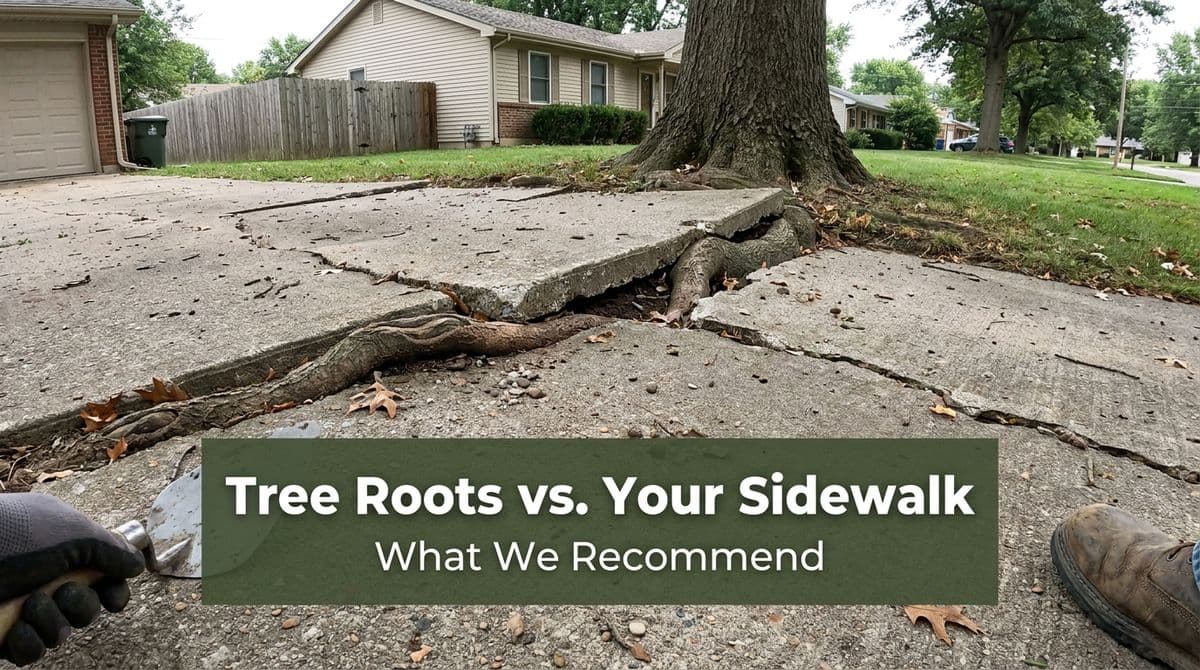
The Tough Question: Save the Tree or Save the Concrete?
We recently got a call from a homeowner — let’s call her Janet — who was really torn about a big pine tree in her front yard. The tree was a family favorite, gave great shade, and was basically the “gem” of the property. The problem? Its roots were pushing up the pavers along the walkway and getting very close to the driveway.
Janet’s main question to us was simple: “Can we just cut the roots that are lifting the pathway and keep the tree?” She was hoping there was a way to protect the concrete without losing the pine.
That conversation is one we have a lot, so we want to walk you through how we, as arborists, think about tree roots, sidewalk and driveway damage, and when it’s time to consider full removal.
Why Roots Rise Under Sidewalks and Driveways
First, it helps to understand what’s going on under the surface. In urban yards, trees near houses, sidewalks, and driveways rarely grow a deep tap root. Instead, they spread out wide, close to the surface.
Why? Hard surfaces like roofs, driveways, and sidewalks shed water, and that runoff tends to collect in the nearby soil. The tree “learns” that the moisture and nutrients are shallow and stays near the top layer of soil. Over time, those shallow roots thicken, and that’s when you start seeing:
- Pavers or concrete slabs lifting and cracking
- Trip hazards along walkways
- Driveway panels tilting or separating
That’s exactly what was happening at Janet’s house: one especially large root was visibly pushing her pavers up.
Why Cutting Major Roots Is Almost Never a Safe Fix
We get asked all the time, “Can’t you just cut that one big root?” Our honest answer is almost always: no, not if you want to keep the tree alive and safe.
Here’s why cutting large roots is so risky:
- You’re removing the tree’s lifeline. Roots are how a tree eats and drinks. When you remove major roots, you’re starving the tree of water and nutrients.
- You weaken the tree’s stability. Big roots act like anchors. Cutting them can make the tree more likely to lean or fail in a storm.
- You open the door to disease and decay. Fresh cuts in the root system are like open wounds. Fungi and bacteria move in, and decay can slowly work its way back toward the trunk.
We told Janet the same thing we tell everyone: once you start chopping out significant roots on a mature tree, you almost always start a slow decline. It might take a couple of years, but the tree usually dies — and then you’re left with a large dead tree right next to your house, which is even more dangerous and expensive to deal with.
How We Evaluate Root Damage and Risk
When we come out to look at a tree like Janet’s pine, we’re not just staring at the cracked pavers. We’re evaluating the whole situation. Some key things we look at:
- Distance from the house and structures. Are roots headed toward the foundation, garage slab, or utility lines?
- How much damage is already done. Are we talking about a few raised pavers, or slabs breaking and creating serious trip hazards?
- The tree’s overall health. Is the canopy full and green, or are there dead limbs, thinning foliage, or signs of stress?
- Size and species of the tree. An 80–100 foot pine, like Janet’s, carries much more risk if it’s compromised than a small ornamental tree.
If the roots are only affecting a walkway and the homeowner doesn’t mind a few bumps, we often recommend simply monitoring the tree and living with some imperfect pavers. But when roots start moving toward the house foundation or are causing serious structural or safety issues, that’s when we have a different conversation.
When We Recommend Removing the Tree
As arborists, we love trees, and removal is never our first choice. But there are situations where, from a safety and long-term cost standpoint, removal is the most responsible option. We generally recommend taking a tree out when:
- Roots are impacting the foundation or threatening buried utilities.
- Major roots would have to be cut to save the concrete, making the tree unstable or unhealthy.
- The tree is already in a tight space near the house, driveway, or neighbors’ property, and failure would be severe.
- The damage costs keep adding up — repeated concrete repairs, tripping hazards, or liability concerns.
In Janet’s case, we explained that if she truly couldn’t live with the lifting pavers and the roots started moving closer to the house, the best long-term solution would likely be to remove the pine entirely rather than try to surgically cut roots around it.
Living With the Tree vs. Letting It Go
We know this is an emotional decision. For many families, that big front yard tree is part of the home’s identity. Our job is to be honest about the trade-offs so you can make an informed choice.
Here’s how we suggest thinking it through:
- If you can live with some bumps in the sidewalk or pavers and the roots are not threatening the house, you may be able to keep the tree and adjust the hardscape over time.
- If the concrete damage is severe, roots are headed toward the foundation, or you’re considering cutting major roots, it’s usually time to talk seriously about removal.
When we remove a large tree, especially one close to structures, we work it down carefully from the top, piece by piece, to protect your home, driveway, and landscaping. It’s a complex process, but it’s often safer and more cost-effective in the long run than repeated concrete repairs and a declining, unstable tree.
Not Sure What to Do? Here’s Our Advice
If you’re looking at a sidewalk or driveway being lifted by tree roots, we recommend:
- Do not cut major roots on your own. The risk to your tree and your home is too high.
- Get a professional evaluation. Have an arborist look at the tree’s health, root direction, and proximity to foundations and utilities.
- Weigh the long-term picture. Consider safety, future repair costs, shade value, and how attached you are to the tree.
We’re always happy to look at photos first and, if needed, come out for a full assessment. Whether you decide to live with the bumps or let the tree go, we’ll give you straightforward guidance so you’re not guessing about what’s happening under your sidewalk.