Tree Removal & Cal Fire Inspections When Selling a Home
Selling in wildfire country? Learn how smart tree removal, Cal Fire defensible space inspections, and view improvements can work together to boost safety and value.
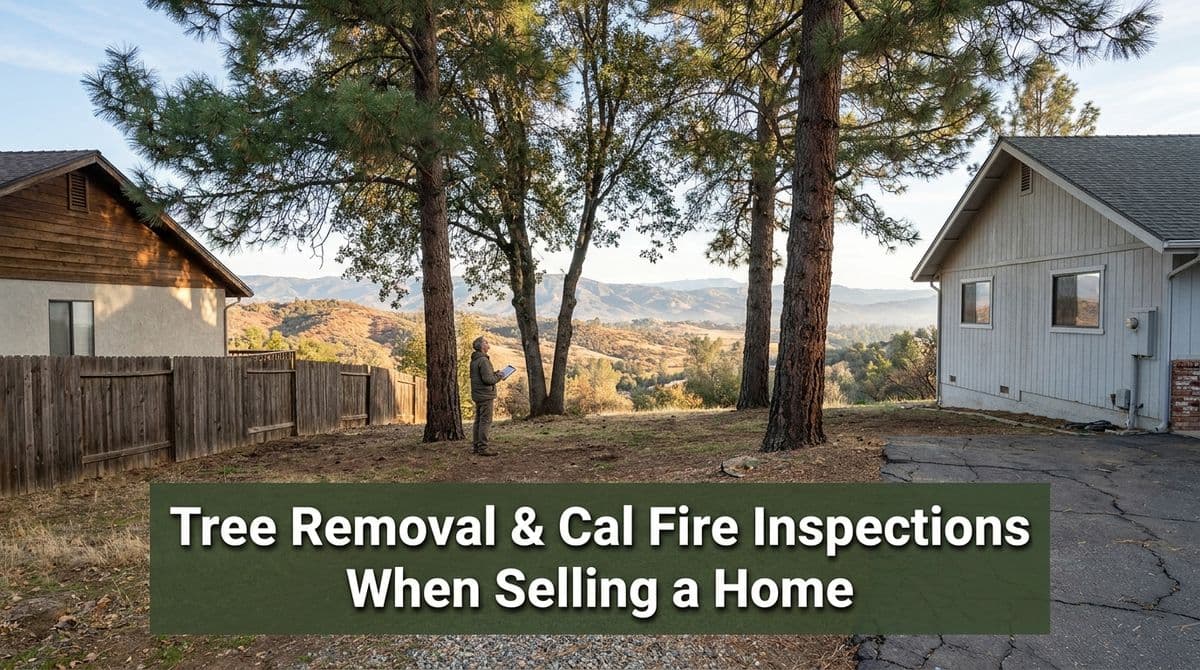
Getting Ready to Sell in Fire Country: A Real Call That Says It All
We recently got a call from a homeowner — let’s call him Mark — who was in town settling his mom’s estate and getting her Mount Shasta property ready to sell. He wanted about five trees removed, mainly to open up the beautiful view of the mountain.
As we talked, it came out that he’d heard about the newer Cal Fire defensible space inspection requirement before listing a home. He remembered an older inspection that was “basically pretty good,” except for some leaf debris by a barn. His question was simple but important:
“Can we take out these trees for the view and still pass whatever Cal Fire is going to look for before we sell?”
That’s the balance a lot of sellers in wildfire-prone areas are trying to strike: views, safety, and real estate goals all at the same time. Since I’m a former firefighter and work closely with Cal Fire assessors, this is something I walk people through all the time — and I usually do those wildfire safety walkarounds for free when we’re out to look at tree work.
How Tree Removal Fits Into Wildfire Risk and Home Value
When you’re selling a home in a high-fire area, trees are both an asset and a liability:
- Asset: Shade, curb appeal, privacy, and of course, views when they’re placed well.
- Liability: Ladder fuels, overhanging limbs, and dense vegetation that can feed a wildfire right up to the structure.
For sellers, smart tree work can help you in three ways:
- Reduce wildfire risk and make it easier to pass defensible space inspections.
- Clean up the look of the property so photos and showings look better.
- Open up views that can legitimately bump perceived value and buyer interest.
Where it goes wrong is when trees are removed only for the view, and the work doesn’t actually help — or even hurts — fire safety. That’s why planning around Cal Fire defensible space guidelines before the saws come out is so important.
What Cal Fire Looks For Before You List
California now requires a defensible space inspection in state responsibility areas (and some local jurisdictions) when a home is being sold. Your Realtor probably mentioned this to you like Mark’s did.
Every inspector is a little different, but they’re all working from the same basic playbook. Here’s what they typically look for:
1. Debris and Cleanliness Around Structures
This was the only thing that got flagged on Mark’s mom’s place a few years back: leaf debris near an outbuilding. That’s common. Inspectors are watching for:
- Dry leaves, needles, and twigs collecting along foundations, decks, and fences
- Debris on roofs and in gutters
- Flammable junk piles (old lumber, cardboard, firewood stacks) against walls or under decks
These are usually quick wins: a leaf blower, a rake, and a dump run can make a big difference before the inspection and before listing photos.
2. Tree Spacing and Ladder Fuels
This is where tree removal and pruning really come into play. Inspectors focus on:
- Horizontal spacing between tree canopies, especially on slopes
- Vertical spacing between low tree branches and grass/shrubs below (ladder fuels)
- Dense clusters of small and medium trees that could carry fire quickly
Typical recommendations include:
- Removing smaller, competing trees to create space between crowns
- Limbing trees up (often 6–10 feet off the ground, depending on tree size)
- Thinning out brush under trees so fire can’t “climb” into the canopy
In Mark’s case, the biggest trees he described were medium-sized blue spruces in the 20–25 foot range, plus a few smaller trees. Those are the kinds of trees where we’ll ask: are they part of a crowded group that’s creating ladder fuels, or are they isolated but blocking a view?
3. The 0–5 Foot and 5–30 Foot Zones
Inspectors think in terms of distance from the house or other structures:
- 0–5 feet: Ideally no combustible plants or materials at all. This is the “noncombustible zone.”
- 5–30 feet: Reduced fuels — widely spaced plants, well-maintained trees, no big piles of flammable material.
Most of the heavy tree work happens in that 5–30 foot ring. If the trees you’re considering removing are inside that area, their condition and spacing matter even more.
Balancing Views, Safety, and Real Estate Goals
When someone calls us like Mark did and says, “We want a clearer view of the mountain,” here’s how we approach it so it lines up with Cal Fire requirements and buyer expectations:
Step 1: Walk the Property With Two Lenses
On site, we look at every tree through two lenses:
- Fire behavior: Is this tree a hazard based on location, species, density, and ladder fuels?
- Real estate appeal: Does this tree frame the house nicely, or is it blocking a signature view or making the yard feel cramped and dark?
Sometimes a tree that’s bad for fire safety is also bad for aesthetics — those are easy decisions. The trickier ones are healthy, attractive trees that just happen to be in the wrong spot for your view.
Step 2: Remove Strategically, Prune Aggressively
We rarely jump straight to “take them all down.” Instead, we often recommend:
- Removing a few key trees that both open the view and break up fuel continuity.
- Limbing up and thinning remaining trees to improve visibility through them while also reducing ladder fuels.
- Clearing understory brush so the ground is more open and less flammable.
On a job like Mark’s, it’s common to drop one or two of the medium spruces that block the main view corridor, then prune the rest to meet defensible space standards and make the yard feel bigger and lighter.
Step 3: Time the Work With the Listing and Inspection
In Mark’s situation, the timeline was tight — he was hoping to have trees cut within about a week so they could move quickly on the sale. The reality in fire season is that most reputable crews are booked out several weeks, which I was upfront about with him.
If you’re preparing to sell:
- Call a tree service early — ideally 1–2 months before you want to list.
- Ask specifically for help aligning the work with Cal Fire defensible space guidelines.
- Plan debris clean-up (raking, blowing, hauling) just before the inspection and photos.
Practical To‑Do List Before You Call Us
To get the most out of a tree estimate and be ready for Cal Fire:
- Walk around your home and outbuildings and remove obvious debris (leaves, needles, scrap wood).
- Note which trees are blocking key views you want to highlight in the listing.
- Look for branches hanging low over roofs, decks, or brushy areas.
- Ask your Realtor if they have any inspection notes or past reports on file.
- When you call, mention that you’re selling and expecting a Cal Fire inspection so we can advise with that in mind.
If you’re in a wildfire-prone area and getting ready to sell, you don’t have to choose between a great view and a safer property. With the right plan, your tree work can help you pass inspections, showcase your home, and protect the next family who lives there — all at the same time.