Why Hiring a Licensed, Insured Tree Service Matters
Thinking about hiring the cheapest tree guy in town? Here’s why choosing a licensed, insured tree service protects your home, wallet, and peace of mind.
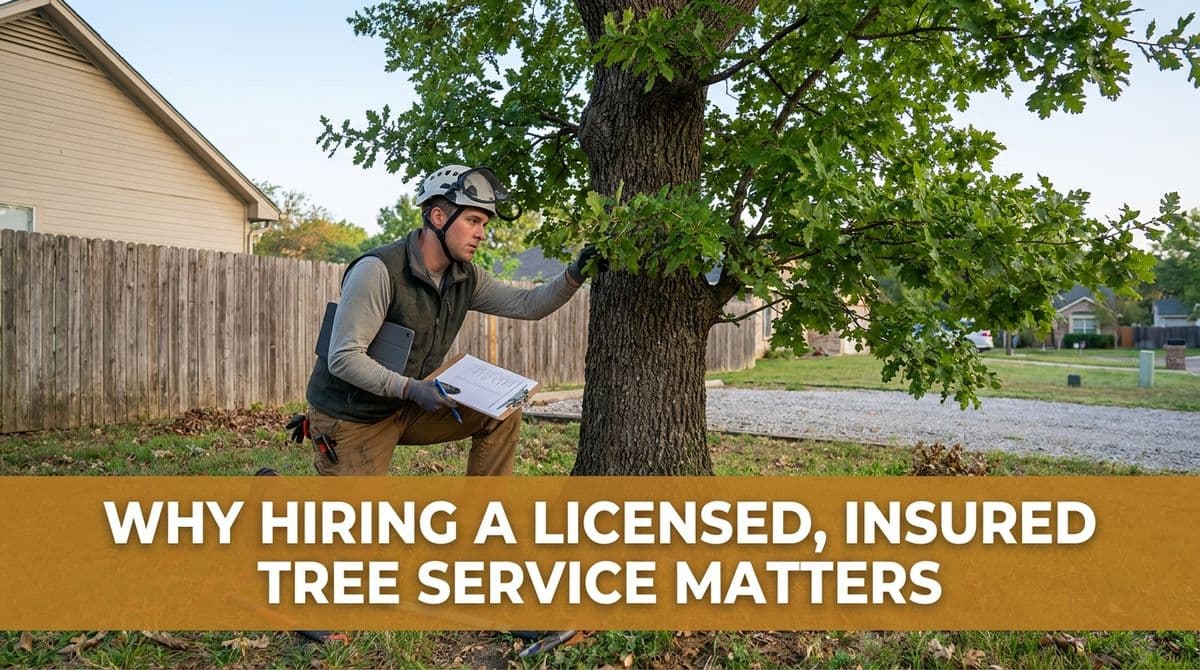
Why We Tell Customers Upfront: We’re Not the Cheapest
We recently got a call from a homeowner—we’ll call him Mark—who needed several junipers looked at in his backyard. One was a big old juniper that needed to come out entirely, the others were half-dead and he wasn’t sure whether to remove or try to clean them up.
As I climbed down from a tree on another job and called him back, we talked through what he had going on. Before we even set the estimate time, I told him something I tell every new customer:
“We’re fully licensed and insured, and we’re definitely not the cheapest service in town.”
I could almost hear the pause on the other end of the line. Like a lot of homeowners, Mark had probably already seen cheaper quotes from guys working without a license or insurance. That’s where the real conversation began—why a legitimate, insured tree service can cost more, and why it matters so much for your home and your safety.
What “Licensed and Insured” Really Means for You
“Licensed and insured” gets tossed around a lot, but it’s not just a slogan. When I explained it to Mark, I broke it down the same way I’ll share with you here.
Licensing: Accountability and Standards
When a tree company is properly licensed in your state or city, it means:
- They’re registered as a legitimate business.
- They’ve met any local requirements for operating a tree service.
- There’s a state or local agency you can contact if something goes wrong.
An unlicensed operator might still be a good climber, but if they damage your roof, fence, or your neighbor’s car, you have very little recourse beyond small claims court—and even then, collecting can be a nightmare.
Insurance: Who Pays When Something Goes Wrong
For tree work, two main types of insurance matter:
- Liability insurance – Covers damage to property (your house, vehicles, fences, landscaping, or a neighbor’s property) caused by the work.
- Workers’ compensation – Covers injuries to workers while they’re on your property.
If a worker falls from your tree and the company doesn’t carry workers’ comp, there’s a real risk that you or your homeowner’s insurance could be pulled into that claim. That’s the part many homeowners never realize until it’s too late.
Why Cheaper Tree Work Can Cost You More
During our call, I told Mark that there are always guys who will show up with a chainsaw and a pickup truck, no license, no insurance, and quote a number that sounds almost too good to be true. Sometimes they get away with it. Sometimes they don’t, and the homeowner pays the price.
Hidden Risks Behind the Low Price
Here are a few ways “cheap” can turn expensive fast:
- Property damage – A misjudged cut can send a heavy trunk into your roof, deck, or power lines. Repairing that can easily cost more than you saved.
- Injury on your property – If a climber with no coverage gets hurt, attorneys will look at every possible source of payment, including the homeowner.
- Improper pruning – Bad cuts or “topping” a tree can shorten its life and lead to dangerous future failures you’ll have to fix later.
When Mark heard that, he understood why our estimate might be higher than the guy who just “does tree work on the side.” He wasn’t just buying a removal; he was buying protection—for his home, his wallet, and his peace of mind.
How We Keep Costs Fair Without Cutting Corners
On the phone, I also mentioned something that surprises a lot of people: I climb almost everything myself. That’s not about being flashy; it’s about efficiency and control.
By climbing instead of bringing in heavy equipment on certain jobs, we can often keep costs down, avoid tearing up lawns or driveways, and work safely in tight backyards. It lets us balance professional standards—licenses, insurance, trained crew—with a price that’s still fair.
The goal isn’t to be the cheapest; it’s to be the best value. That means combining proper coverage, safe techniques, and clear communication with homeowners about what we’re doing and why.
Quick Checklist: What to Ask Before You Hire a Tree Service
If you’re calling around like Mark was, here’s a simple checklist you can use to protect yourself before saying yes to any quote:
- Are you licensed for tree work in this area?
Ask for their license number and the agency that issued it so you can verify. - Do you carry liability and workers’ comp insurance?
Request a current certificate of insurance made out to you as the certificate holder. - Who will actually be on site?
Confirm if the crew is employees or subcontractors, and that they’re covered under the policy. - How will you access the tree?
Will they climb, use a bucket truck, or heavy equipment? Ask about lawn, fence, or landscape protection. - What’s included in the price?
Clarify whether cleanup, hauling, and stump grinding are included or separate. - Can you describe how you’ll do the work safely?
You don’t need all the technical jargon—just listen for a clear, confident plan.
If a company dodges these questions, can’t provide proof, or pressures you to decide on the spot, that’s a red flag. A reputable, licensed, insured tree service will be happy to walk you through every answer.
Paying for Peace of Mind
In the end, Mark decided it was more important to protect his home and his back yard than to chase the lowest possible number. When we show up, he’ll get a detailed plan, safe removals of his problem trees, and the confidence that if anything unexpected happens, he’s covered.
Tree work is one of the riskiest services you can hire for your property. Choosing a licensed, insured company isn’t about paying extra—it’s about making sure that the person taking down that big old juniper isn’t putting your home, your savings, or your safety on the line.